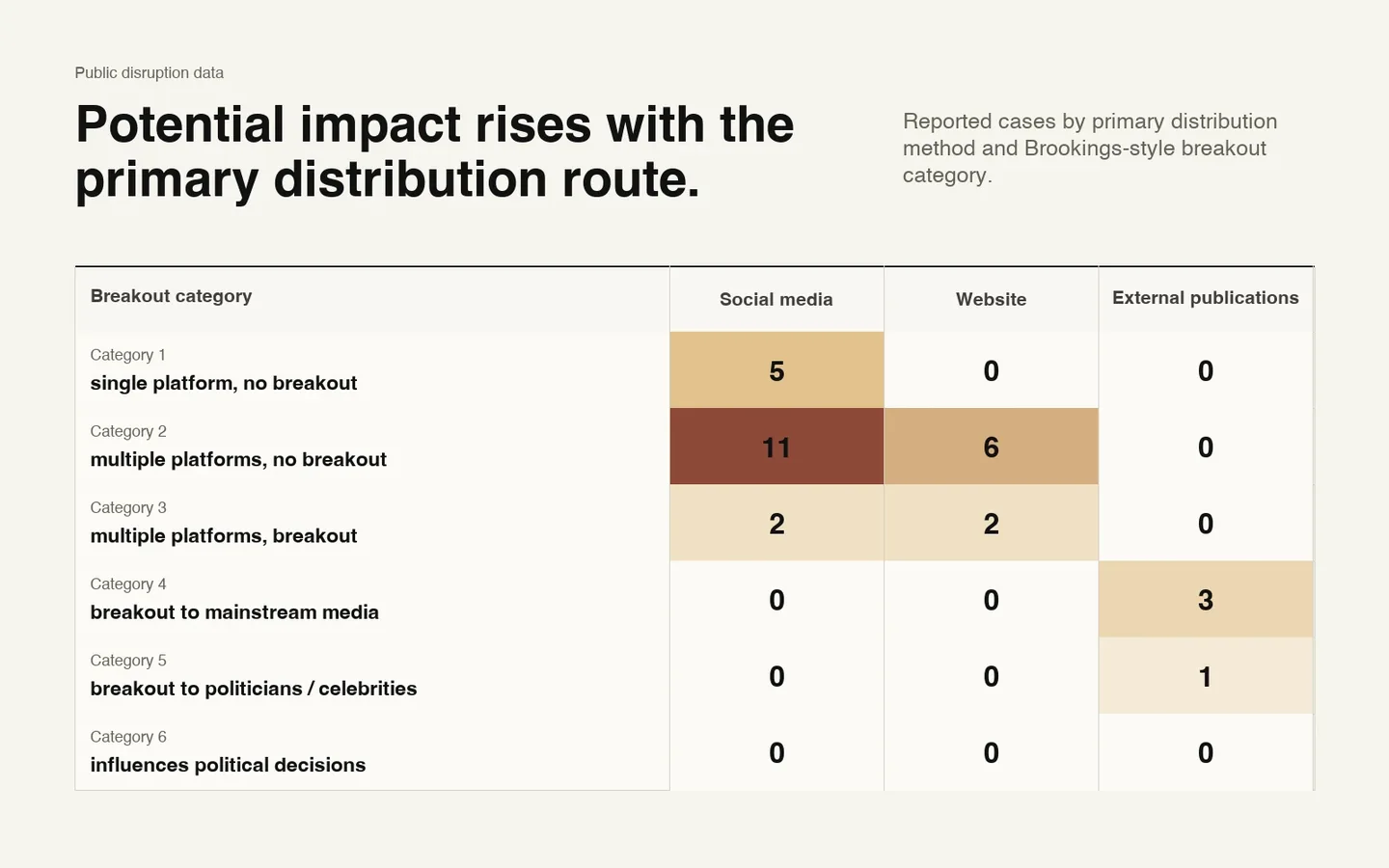
The two operations described in OpenAI's October 8 report mixed its models with more traditional influence techniques. OpenAI says it banned accounts linked to operations originating in Russia and Iran that used false-front entities to carry geopolitical and conflict-related messages to their target audiences. AI appears as part of an operation, not an explanation of every piece of content it produced.
The report describes seven fictitious journalist personas pitching long-form articles to small and medium online outlets in the Iranian case, and an apparent use of unwitting people in Latin America to run a think tank in the Russian case. Those routes matter because distribution can pass through real media channels and organizations, rather than relying only on fake social accounts.
OpenAI rates the Russian operation category 5 and the Iranian operation category 4 on the Breakout Scale, and distinguishes public content production from drafting internal reports. The attribution and reach assessments are OpenAI's; the report does not establish that all the content was generated by its models. Its value is in describing the claimed operating pattern, while retaining those limits on what the provider can demonstrate.