Gemini 4 Argon moves to general availability
TL;DR
Google opens Argon in its API and in Gemini for AI Pro and Ultra subscribers; this is not its first announcement.
General availability
Public sources. Verified facts. Analysis kept separate from announcements.
131 stories
TL;DR
Google opens Argon in its API and in Gemini for AI Pro and Ultra subscribers; this is not its first announcement.
General availability
TL;DR
Meta launches a new family of models for personal and professional agents.
Available
TL;DR
Super VL and Bolt target different hardware budgets, with weights now published.
Weights published; E4B announced for October 23
TL;DR
The model is downloadable subject to conditions; the demo on two high-end machines does not describe typical hardware.
Weights published under a specific license
TL;DR
xAI updates its voice conversation model for support agents and real-time exchanges.
Available in Voice Agent API
TL;DR
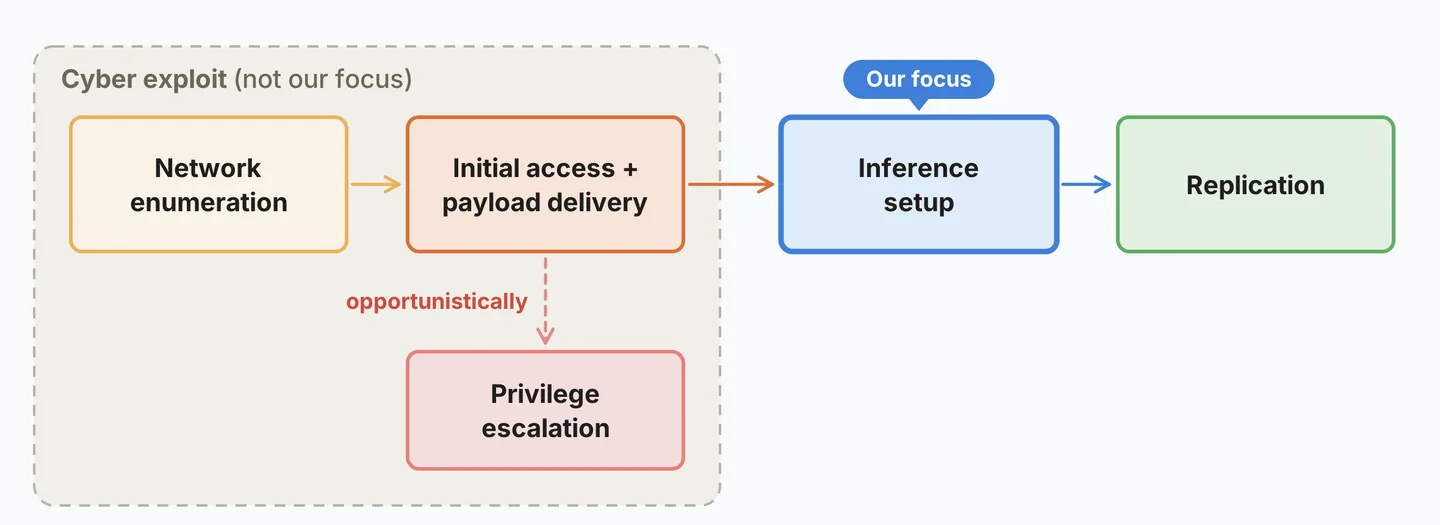
A study tests distributed inference on ordinary hardware and measures the steps needed for autonomous replication.
publication
TL;DR
Web, app and the deepseek-flash API alias receive the new version without an announced price change.
Deployed update
TL;DR
Creation, editing and presenting come together in the shared workspace.
Gradual rollout
TL;DR
The update combines faster responses, tools and observable parallel tasks.
Gradual Pro rollout
TL;DR
The arrangement goes beyond API testing while retaining exclusions and redaction rights.
External evaluation underway

TL;DR
The research combines code proposals, an external verifier and optimization of qubit and gate cost.
Research results
TL;DR
The changelog combines real-time apps, inference and least-privilege agent access.
Realtime in public beta

TL;DR
The platform remains open according to the company, but its survival depends on the result of a court sale.
Chapter 11 procedure, proposed sale
TL;DR
Team and Enterprise organizations can automate review of new pull requests.
General availability

TL;DR
Structured search and Markdown extraction become two primitives available with the same API authentication.
API available
TL;DR
The results of MAI-Base-2 give an industrial capacity signal, not a new button in Copilot.
Pre-training results, not an available product
TL;DR
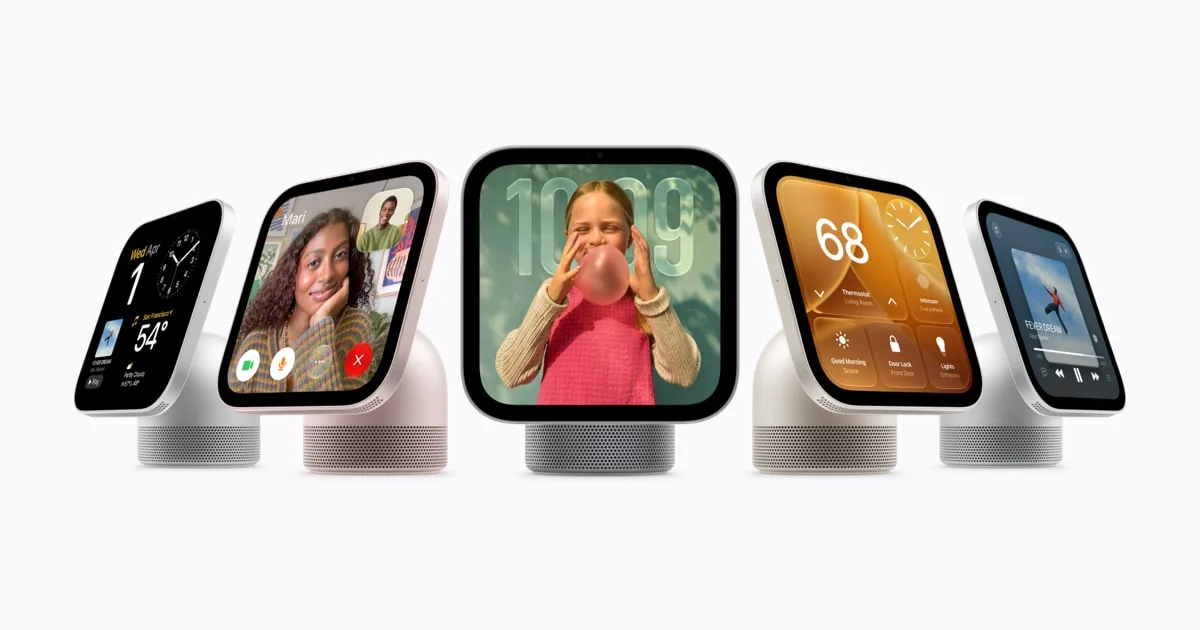
The Siri AI home display personalizes its interface through user recognition; availability remains strongly regionalized.
Preorders; delivery announced for November
TL;DR
A common plan brings together an assistant, coding agents and a social network, with a shared Grok usage pool.
Gradual global rollout

TL;DR
Agents can produce a shareable interactive surface and manage environments through an API.
Canvases available; API in beta

TL;DR
Growth tools connects recommendations, ad creative and campaigns inside the project conversation.
Available

TL;DR
The voice update focuses on accents and spoken signals during searches.
Gradual rollout
TL;DR
The study explains historical parameters rather than breaking digital signatures.
Research result

TL;DR
The access program is neither a new model nor an immediate worldwide rollout.
Applications open in the United States

TL;DR
The study describes an AI-intensive organization where human attention becomes a bottleneck.
Internal observational study

TL;DR
WebMCP lets an agent act in the open browser tab using the person’s existing session.
Available
TL;DR
DigitalOcean connects observation of real conversations to testing fixes before deployment.
Public preview

TL;DR
An August survey published October 16 compares experiences and expectations, not certain forecasts.
Survey research

TL;DR
The agreement prepares long-term scientific cooperation; no finished model is delivered in the announcement.
Statement of intent
TL;DR
The creative API gains typography-oriented generation, reference images and targeted editing.
Available through the API

TL;DR
Several video generation and editing variants are available through Runway endpoints.
Available through the API
TL;DR
The proposal ties a share of company value to public-benefit activities without announcing an immediate distribution.
Commitment subject to approval

TL;DR
The October 16 Claude Code 2.1.302 changelog adds a warning to /design-sync and /design-login: standalone claude.ai/design closes by December 14, 2026. This is a transition notice, not a shutdown during this week.
Future availability announced
Read the full article →TL;DR
An account indexed on October 16 describes an Anthropic Japan sales representative’s Nakama fleet: five working agents and a coordinator, with shared memory, scheduled deployments and credential vaults scoped to each job. Agents prepare replies, follow up on work and update Salesforce; the representative reviews and sends emails.
Vendor case study
Read the full article →TL;DR
On October 16, Google presented three research components connecting agents to physical experiments. VERID represents the laboratory through a persistent semantic twin, supporting inspection, pre-execution simulation, traces and execution checks. Its report validates optical and fluidic foundations using dye and water mixtures, not universal automation of biology.
Research / technical publication
Read the full article →TL;DR
The primary post dated October 16 presents Nemotron-pretraining-Indic-v1, a synthetic corpus of roughly 2.8 trillion tokens across twenty-two Indian languages, alongside an open generation recipe. The text says the corpus is releasing soon, not that its complete download is already available this week. The index gives October 15; the direct article date is used here for the communication.
Future availability announced
Read the full article →TL;DR
The October 16 OpenAI case describes Benefit Street Partners tools for comparing loan valuations and analyzing credit agreements. An initial tracker was built in a day; including later additions, its author estimates 10–12 total development hours, using Codex for code review.
Vendor case study
Read the full article →TL;DR
On October 16, OpenAI described Itaú’s conversational ia.i interface and IARA governance platform. The first phase covers roughly 300,000 customers; expansion to the whole customer base by the end of 2026 remains a goal, not a completed deployment on the post’s date.
Vendor case study
Read the full article →TL;DR
The October 16 case study reports registrations tripling for Stack Overflow for Agents following its ChatGPT plugin and up to tenfold growth in agent creation. Two engineers reportedly shipped the product in a few weeks with Codex; these figures come from the customer account relayed by OpenAI.
Vendor case study
Read the full article →TL;DR
Reflection has made Beam’s weights available for coding, reasoning and long-horizon agent workloads. The October 5 preview promised a later release; October 16 marks that availability, confirmed the same day by Ollama.
Available under stated conditions
Read the full article →TL;DR
Hugging Face’s integration adds text-to-image generation, editing and reference composition for Black Forest Labs’ FLUX 3 Image Klein. Bounding boxes in prompts specify placement or the region to edit.
Available under stated conditions
Read the full article →TL;DR
Google’s October 15 post highlights its disaster-resilience white paper and recaps flood and cyclone forecasting and wildfire tracking. The PDF states “Publication date: September 2026” and “Content updated: October 15, 2026.” This week’s event is therefore an update and its public presentation, not first publication in October.
Feature release / rollout
Read the full article →TL;DR
On October 15, Google announced more inline links in AI Mode and AI Overviews, timely-article carousels expanding globally and related-article thumbnails. Some changes remain tests, including highlighting official links and creator or publisher profiles. Not every change should therefore be described as simultaneously active for every Belgian user.
Feature release / rollout
Read the full article →TL;DR
The shared cart organizes shopping and tracks prices, with human control over checkout.
US rollout

TL;DR
IBM has released 8B and 30B Granite Switch configurations combining a chat model, Decision and Guardian adapters, and Granite Speech transcription. They share one endpoint rather than requiring entirely separate serving systems.
Available under stated conditions
Read the full article →TL;DR
Liquid AI has launched d1-ultra, which returns decision probabilities instead of generated prose. It accepts text, images or both and supports yes/no questions, label choices and scores. Examples include circuit-board inspection and photo-backed damage claims.
Available under stated conditions
Read the full article →TL;DR
MacPaw has launched Eney, an assistant that combines application, file and system context to prepare everyday tasks. On Mac, it can offer meeting notes without a bot joining the call, draft a recap, find documents or suggest a fix when disk space runs low. Eney Wand also lets users select an area of the screen to translate it, extract text or prepare an action.
Feature release / rollout
Read the full article →TL;DR
Mistral has released its first time-series foundation-model family. Timestral produces probabilistic multivariate forecasts using historical data plus past-only or known-future covariates such as production schedules.
Available under stated conditions
Read the full article →TL;DR
On October 15, OpenAI announced a Brazilian Portuguese edition of AI for Educators on its free Academy platform. The course targets primary, secondary and higher-education teachers, covering lesson planning, activities, assessments and communications.
Feature release / rollout
Read the full article →TL;DR
On October 15, OpenAI added native Decisions integration to GPT-Live. An application can act while someone speaks or respond to what Live says. The announcement describes two paths: let Live delegate directly to Decisions, or trigger decisions as incoming or outgoing transcript deltas arrive.
Feature release / rollout
Read the full article →TL;DR
The October 15 ChatGPT notes remove the fixed limit on how many Sites Plus and Pro subscribers can create. The change concerns the number of Sites, not every resource they can consume.
Feature release / rollout
Read the full article →TL;DR
On October 15, OpenAI published the Sullivan & Cromwell case: Agreement Analyzer translates agreement-review expertise into an AI tool. The workflow distributes analytical perspectives in parallel and sets different readings against one another to identify issues and negotiation points.
Vendor case study
Read the full article →TL;DR
Perplexity has released SPACE’s source code for isolated agent execution. Each environment runs in a small virtual machine with its own operating system. An external control plane manages lifecycle, networking and platform-held credentials.
Public announcement / source release
Read the full article →TL;DR
Sferical AI has presented a Swedish shared system for AstraZeneca, Ericsson, Saab, SEB and Wallenberg Investments, with SKF as strategic partner. Its October 15 release says it has been running since late summer, not first powered on during W42.
Public announcement / source release
Read the full article →TL;DR
Ai2 has updated its climate-emulation system: ACE generates roughly 100-kilometer outputs, and HiROv2 downscales them to three-kilometer fields. The new version jointly covers rainfall, wind and pressure with improved extreme-event reproduction.
Research / technical publication
Read the full article →TL;DR
The “daily.dev for agents” launch provides structured access to the platform’s articles, discussions and reading preferences. Claude, Cursor, Codex or another MCP client can read a personalized feed, search articles, inspect comments and, when authorized, save bookmarks or change filters. The launch also includes a plugin marketplace and OAuth applications.
Feature release / rollout
Read the full article →TL;DR
DeepMind and GovTech Singapore presented an on-device scam-detection model on October 14. A version of Gemma is adapted to local scam conversations to identify manipulation beyond phishing links alone. The announcement describes development and phased integration into applications, not protection already enabled on every Android phone.
Feature release / rollout
Read the full article →TL;DR
Participating EU member states have adopted a political declaration on trustworthy, safe and sovereign AI. Adopted October 14 and published in a notice October 15, the document lists Belgium among participants, represented by Vanessa Matz.
Published statement / proceedings
Read the full article →TL;DR
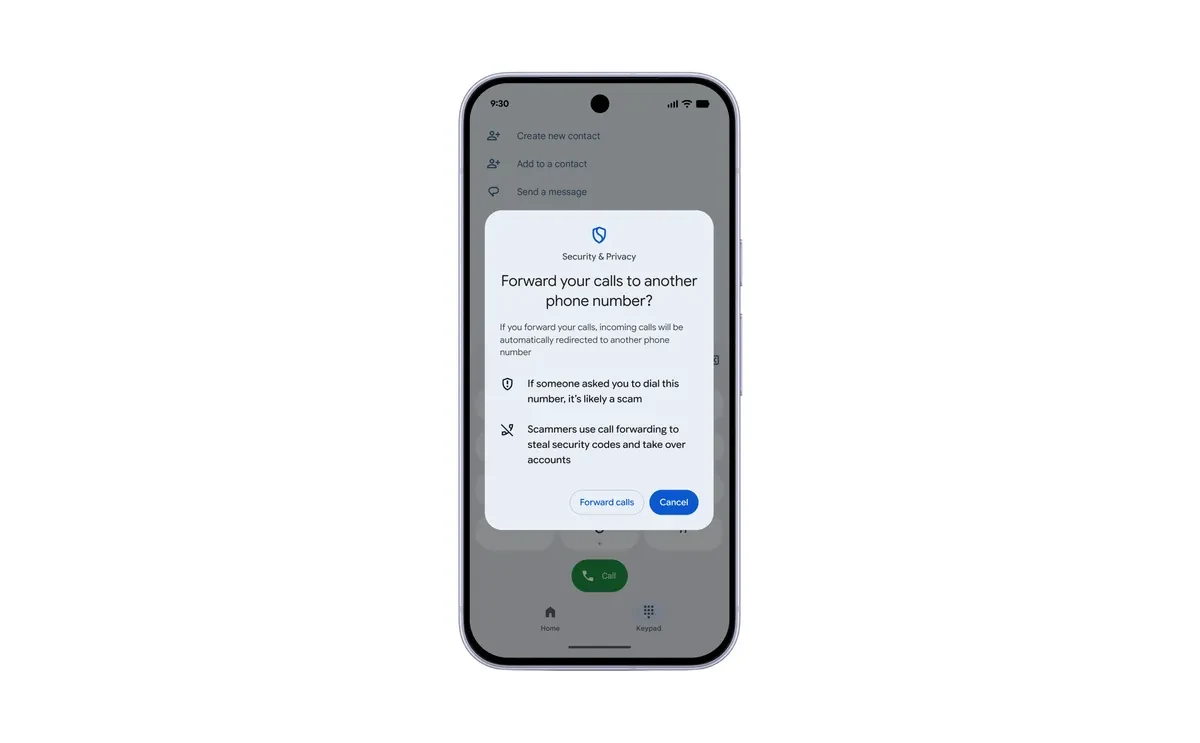
On October 14, Google announced optional enhanced protection in Messages combining Private AI Compute and on-device Gemini Nano. The schedule also includes wider notification alerts later in the year, screen-sharing safeguards this month on Android 15 and later, and call-forwarding protection planned for early December on selected devices.
Future availability announced
TL;DR
Google made Deep Review public on October 14. The agent checks technical documents and provides feedback on consistency and content; the launch expands a scientific-author assistance tool toward other knowledge documents, including legal and financial material. It initially accepts PDF and plain text.
Feature release / rollout
Read the full article →TL;DR
On October 14, Google described Earth AI geospatial agents and expanded experimental early access to deep research in Ask Google Earth and an agent-to-agent API. Access uses an interest form; this is not general availability. Teams can bring CSV, GeoJSON or cloud-table data.
Feature release / rollout
Read the full article →TL;DR
On October 14, Google presented its 2025 European Union economic impact report, commissioned from Implement Consulting Group. The estimate exceeds €200 billion in GDP contribution across its products, platforms, infrastructure and operations.
Research / technical publication
Read the full article →TL;DR
On October 14, Agent Platform makes Priority PayGo generally available for gemini-nano-banana-2.1 on the global endpoint. This is a service and capacity tier, not the first release of Nano Banana 2.1.
Feature release / rollout
Read the full article →TL;DR
The October 14 Research@ overview announces an upcoming integration of TimesFM and TabFM into Gemini for business. The models handle time series and tables respectively; the post says they are already available to BigQuery users. This week’s announcement is therefore a future integration, without a delivery date or demonstrated immediate new access.
Future availability announced
Read the full article →TL;DR
On October 14, Google.org announced the 17 organizations selected for its AI for Science Impact Challenge, with $36 million in funding. They can opt into a six-month accelerator combining engineering, technical mentorship and Google infrastructure. These are recipients of an existing call, not a newly opened application round.
Research / technical publication
Read the full article →TL;DR
Meta, Pinacoteca di Brera and EssilorLuxottica have launched “Sensing Art,” developed with blind and low-vision users and specialist organizations. The glasses integrate with the existing Grande Brera app and DescriVedendo tour.
Feature release / rollout
Read the full article →TL;DR
A study published in Nature on October 14 presents Probabilistic Bias Correction, a method that learns a weather system’s systematic errors from historical forecasts and observations. It aims to improve probabilities over the difficult two-to-six-week horizon, not promise the exact weather on a particular day six weeks ahead.
Research / technical publication
Read the full article →TL;DR
Modal has announced a $750 million Series D led by Accel at a $15.75 billion post-money valuation. It says it has crossed $1 billion in annualized run rate, linking growth to inference, background agents, sandboxes and training.
Commitment announced
Read the full article →TL;DR
The October 14 case study describes how Amp combines GPT-6 Astra, Ultrafast, GPT-Live-1 and Sign in with ChatGPT for agents beyond programming. Voice and the Puck experience provide entry points for delegating and following work.
Vendor case study
Read the full article →TL;DR
Published on October 14, Block’s account describes Daybreak and other OpenAI systems for vulnerability discovery, detection and response. In red-team exercises, the time from a high-level vulnerability report to an automatically proposed patch is reported as 18 minutes.
Vendor case study
Read the full article →TL;DR
The attorneys general of Iowa and Arizona have announced consumer-protection actions against OpenAI. Iowa also names Kansas, Nebraska, West Virginia, Arkansas, Idaho and Montana. These are individual proceedings in state courts, not one federal judgment.
Published statement / proceedings
Read the full article →TL;DR
The October 14 OpenAI case study quotes SentinelOne’s AI executive: Daybreak reportedly produces human-level malware reverse engineering in about eight hours, compared with four to six weeks for an expert in the described example. The comparison comes from an interview, not a published benchmark protocol.
Vendor case study
Read the full article →TL;DR
In an October 14 OpenAI case study, Third Moment Research describes running up to 10,000 agents concurrently on investigations lasting 36–48 hours. Its stack combines GPT models, Codex for coding work and Daybreak to test environment security.
Vendor case study
Read the full article →TL;DR
TypeSafe has released Jev 1.14.0 under jev-preview, describing broad improvements and expecting its largest gains in multilingual support. It also enables image input, including on Jev 1.13, and longer context behind “Danger Zone” headers.
Beta / preview
Read the full article →TL;DR
Anthropic says it migrated its monorepo from Git to Scion in five months to support code volume produced with Claude. The system assumes clients remain online: history queries, diffs and change creation run server-side, with sparse or on-demand working copies.
Research / technical publication
Read the full article →TL;DR
An interview with Uber’s CISO, indexed on October 13 in Claude Resources, describes an architecture combining an LLM gateway, ADR telemetry and Enterprise Frontier Safeguards. ADR, described as open source, collects agent-harness telemetry and enables response actions.
Vendor case study
Read the full article →TL;DR
GitHub lets administrators require fresh remote policy at startup with forceRemoteSettingsRefresh=true. If a client cannot confirm policy, it fails closed instead of using a cache. It covers the CLI, VS Code and Copilot app. MDM or file delivery can enforce freshness before first sign-in; a server-delivered value applies on subsequent startups after receipt.
Feature release / rollout
Read the full article →TL;DR
Workflow Builder adds Microsoft Teams, Notion and Salesforce on October 13, then Confluence Data Center and Jira Data Center on October 16, for data search and action automation. Access depends on tenant connections and permissions; these are not consumer features open to every Gemini account.
Feature release / rollout
Read the full article →TL;DR
On October 13, Google announced a five-million-dollar commitment to weather forecasting and climate research in Ireland. A specifically quantified portion is €2.25 million, or $2.5 million according to Google, provided by Google.org through the UCD Foundation to the AIMSIR Centre and Climate + Co-Centre for a four-year programme. The overall commitment should not be confused with funding for that programme alone.
Research / technical publication
Read the full article →TL;DR
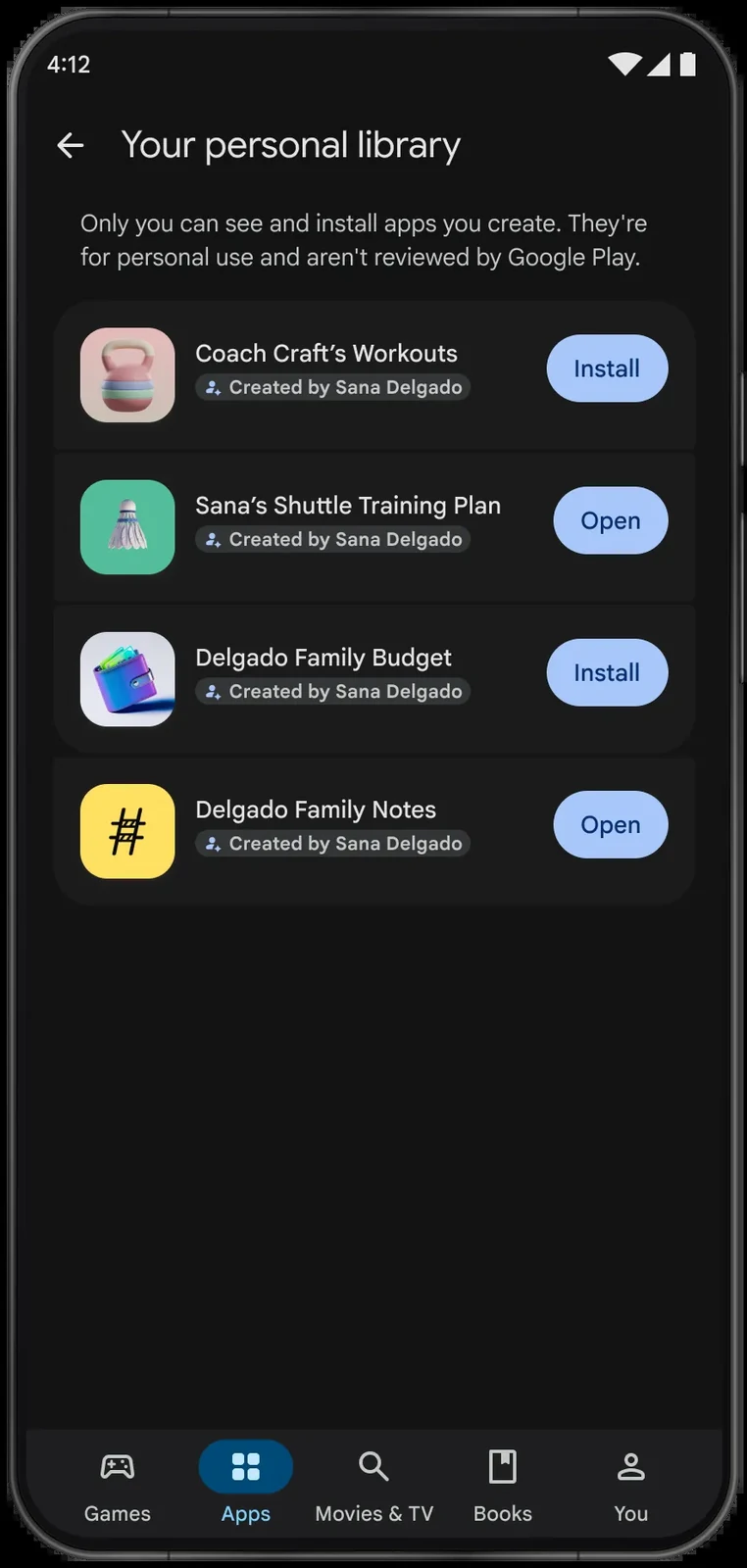
On October 13, Google announced the rollout of personal Android apps built in AI Studio and run on the user’s own device through Play. A standard Google account is sufficient, without a developer account. The rollout starts in selected markets, including the United States, for users aged 18 and over. These projects remain separate from the public catalog.
Feature release / rollout
TL;DR
Hugging Face has announced a native Windows 11 application for downloading and running Hub models through llama.cpp without a build step. Its interface lists recommended models, sizes and capabilities, then lets users load a model and open its web interface.
Feature release / rollout
Read the full article →TL;DR
The reasoning model has 24 billion total and 2 billion active parameters per token. It extends context to 131,072 tokens and targets tool calling and agent loops on local hardware.
Available under stated conditions
Read the full article →TL;DR
Meta is rolling out “Your algorithm,” where users can specify topics they want in Feed and Reels. More detailed feedback can also follow “Interested” or “Not interested” from a post’s menu.
Feature release / rollout
Read the full article →TL;DR
NVIDIA has released the Run:ai platform’s source within its DSX AI Factory ecosystem. The release covers the integrated platform and independently adoptable components: KAI Scheduler, GPU Fractioning Operator, KAI Resource Management and Workload Map.
Public announcement / source release
Read the full article →TL;DR
NVIDIA has announced a five-year commitment valued at $250 million for UK agentic safety and security research. This is $50 million in annual compute access, not a $250 million cash payment.
Commitment announced
Read the full article →TL;DR
Ollama Cloud now works from Fly.io’s persistent Linux Sprites. The connector stores the Ollama key in the Fly.io organization, and a gateway adds it to authorized requests without exposing it directly to agent code.
Feature release / rollout
Read the full article →TL;DR
The US Department of Justice has announced charges against an OpenAI engineer accused of using or attempting to use a device to intercept oral communications. The October 13 release says the arrest took place on October 9 and the initial court appearance occurred on the publication date.
Published statement / proceedings
Read the full article →TL;DR
The Pi API supports uploading robot data, fine-tuning on managed compute and using the adapted model through a hosted inference gateway. Physical Intelligence aims to simplify the collect–train–test iteration loop on real robots.
Beta / preview
Read the full article →TL;DR
Meeting folders become reusable team context, with sharing and connector permissions that deserve separate attention.
Published product update
Read the full article →TL;DR
Agent Platform notes date CodeMender 0.14.0 to October 12: diff scans look for removed security controls, deep and diff scans share a session, and verification finds moved code. On October 14, 0.15.0 improves SARIF 2.1.0 reports for GitHub Code Scanning and adds model-invocation counts to cm stats --json.
Feature release / rollout
Read the full article →TL;DR
On October 12, Google announced Fitbit Edge and opened preorders at a US headline price of $179.99; retail availability is planned for October 27. The product highlights personalized coaching, Health Guardian and contextual activity detection. Health Premium is required for coaching, and health or ECG features depend on factors including country, device and age.
Future availability announced
Read the full article →TL;DR
Microsoft has announced a scale-up of its in-house Maia accelerators starting in 2027. Maia 200 already serves production workloads including Microsoft Copilot, with GitHub Copilot and Foundry expected before year end.
Future availability announced
Read the full article →TL;DR
Microsoft Research presents StudentSim and StudentSimEval, a personalized learner-simulation system and evaluation protocol. It aims to reproduce both a student’s answer and how it changes after guidance rather than simply asking an overly capable model to role-play a student.
Research / technical publication
Read the full article →TL;DR
Endpoint Candidates creates alternative deployments alongside a Dedicated Endpoint. They can receive sampled copies of traffic to compare quality, latency, throughput and cost while production continues to supply the answer users actually see.
Feature release / rollout
Read the full article →TL;DR
Mux has published terms that incorporate the AI Services Addendum directly. The public text dated October 12 replaces April’s standalone addendum and applies by default without a separate activation or acceptance step.
Published statement / proceedings
Read the full article →TL;DR
At the OCP Global Summit, NVIDIA announced Vera Rubin rack and compute-tray design contributions through MGX on October 12. The event concerns industrial interfaces connecting compute, networking, power and cooling, not publication of complete GPU designs that anyone can reproduce freely.
Public announcement / source release
Read the full article →TL;DR
OpenCode 2.0 makes its client-server architecture the default. Terminal, web and desktop interfaces talk to one local background process. Programmatic clients can discover it automatically, and the release exposes a redesigned API.
Feature release / rollout
Read the full article →TL;DR
Remocn Studio 1.1.0 was published on October 12, extending the coding-agent-driven video application to Linux. The 1.0 launch mentioned in some newsletters this week dates to October 1; the dated development concerns Linux and the 1.1 branch, not the studio’s first release.
Available under stated conditions
Read the full article →TL;DR
The beta starts on October 12 without blocking searches or charging for overages.
Usage-accounting beta

TL;DR
The case study concerns creative orchestration and shot consistency, not a video model launched that day.
Vendor case study
TL;DR
An October 13 guide documents image-to-video effects ready to adapt for short campaigns.
Documented presets
Read the full article →TL;DR
NVIDIA announces availability from six manufacturers; native Photoshop and Premiere support remains in beta at launch.
Publication
Read the full article →TL;DR
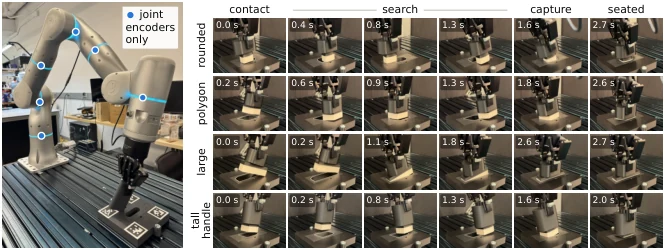
The preprint reports simulation-to-real transfer for insertion, not universal assembly automation.
Publication
TL;DR
Placing a constraint inside reasoning improves compliance in the authors’ tests, with implications for safety monitors.
Publication
Read the full article →TL;DR
The preprint compares flattened and hierarchical designs without naming a universally superior gateway.
Publication
Read the full article →TL;DR
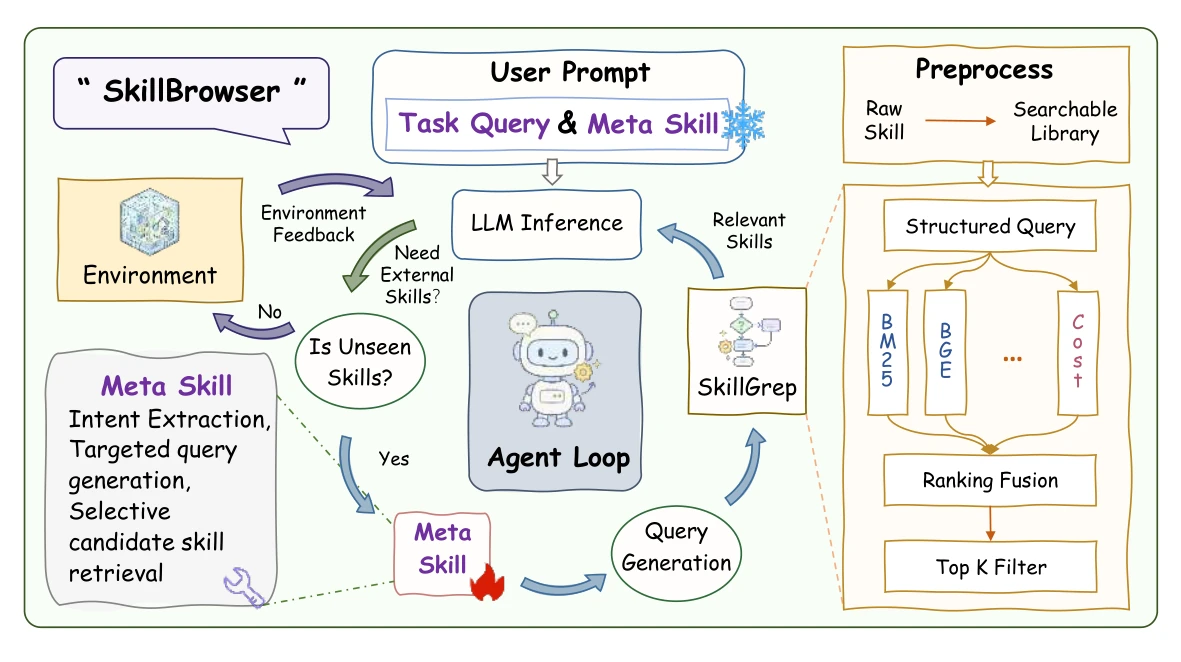
The framework retrieves instructions when a need arises, with latency costs and some useful skills left unused.
Publication
TL;DR
The Commission confirms the October 15 launch; NVIDIA combines technical resources, open courseware and programme-based access.
Publication
Read the full article →TL;DR
The cited gigawatt of capacity is projected for late 2027; the applications were not all launched this week.
Publication
Read the full article →TL;DR
Hyperion, Halos OS and Alpamayo Stack are intended for a next generation; unsupervised driving is not shipping this week.
Publication
Read the full article →TL;DR
The desktop beta and toolkit publication are separate steps; the four supported hosts do not yet have equal coverage.
Publication
Read the full article →TL;DR
The October 15 stable release adds concrete capabilities without turning nearby previews into stable versions.
Publication
Read the full article →TL;DR
Natural-language search and improved repair appear in the announcement; the initial rollout is not general availability.
Publication
Read the full article →TL;DR
The third-quarter figure is attributed to investor-meeting attendees; adjusted profitability and an annualised run rate are not audited annual accounts.
Publication
Read the full article →TL;DR
FrontiersMind releases Apache 2.0 weights and probabilistic choice interfaces, with explicit limits on score questions.
Publication
Read the full article →TL;DR
Respondents report gains and a need for guidance; the commissioned survey does not measure a causal effect.
Publication
Read the full article →TL;DR
Antwerp-Bruges is testing vision applications; Côte-d’Or still plans to adopt Cosmos for video.
Publication
Read the full article →TL;DR
Tether AI Research releases a 254-million-parameter model; desktop and phone variants do not support the same number of languages.
Publication
Read the full article →TL;DR
The October 14 communication documents a specialist merchant tool, not worldwide availability.
Publication
Read the full article →TL;DR
The final report links Amap research to Tencent Cloud, without establishing which model ran or showing coordination between agents.
Publication
Read the full article →TL;DR
The October 14 communication presents two sizes and an embedding model with native 32K context.
Publication
Read the full article →TL;DR
Expedited evidence access, an interim commitment and competing allegations do not amount to a ruling that secrets were stolen.
Publication
Read the full article →TL;DR
History shows weight files uploaded on October 13; that does not date the model’s first API availability.
Publication
Read the full article →TL;DR
A tutorial shows how skills can guide experiments while measuring possible losses on general English.
Publication
Read the full article →TL;DR
Doctolib, Entalpic, Genesis AI and Pigment feature in an announcement whose industry overview mixes existing activities with future projects.
Publication
Read the full article →TL;DR
A public letter proposes isolated environments and an international incident-tracking body, without creating a new legal requirement.
Publication
Read the full article →TL;DR
The announced dataset spans 525 hours and 108 locales; a participant’s supplied script is not a verified transcript.
Publication
Read the full article →TL;DR
A documented replication releases a model and cleaned benchmark; reported gains remain protocol- and annotation-dependent.
Publication
Read the full article →TL;DR
Anthropic describes new classifiers against multi-stage misleading campaigns and announces voting information from Democracy Works.
enhanced protections, announced integration

TL;DR
The report observes the growth of Codex and Work among its European customers and the wide differences between companies and countries.
publication
TL;DR
An update of the local ecosystem mixes available tools and models still announced.
Separate availabilities and announcements

TL;DR
The European Report of 12 October documents the special meeting of 9 October on the risks of advanced models.
Report issued

TL;DR
Its fifth Asia-Pacific office accompanies an agreement on security, evaluation, adoption research and responsible uses.
Opening and agreement signed

Public sources. Verified facts. Analysis kept separate from announcements.
146 stories
TL;DR
Google opens Argon in its API and in Gemini for AI Pro and Ultra subscribers; this is not its first announcement.
General availability
TL;DR
Meta launches a new family of models for personal and professional agents.
Available
TL;DR
A million-token context for Super VL and 256K for Bolt are not identical service guarantees.
Weights published; E4B announced for October 23
TL;DR
816B/42B and a million tokens are not enough to design a service.
Weights published under a specific license
TL;DR
The voice service moves to version 3.0 with no announced price increase; the latest alias has already switched.
Available in Voice Agent API
TL;DR
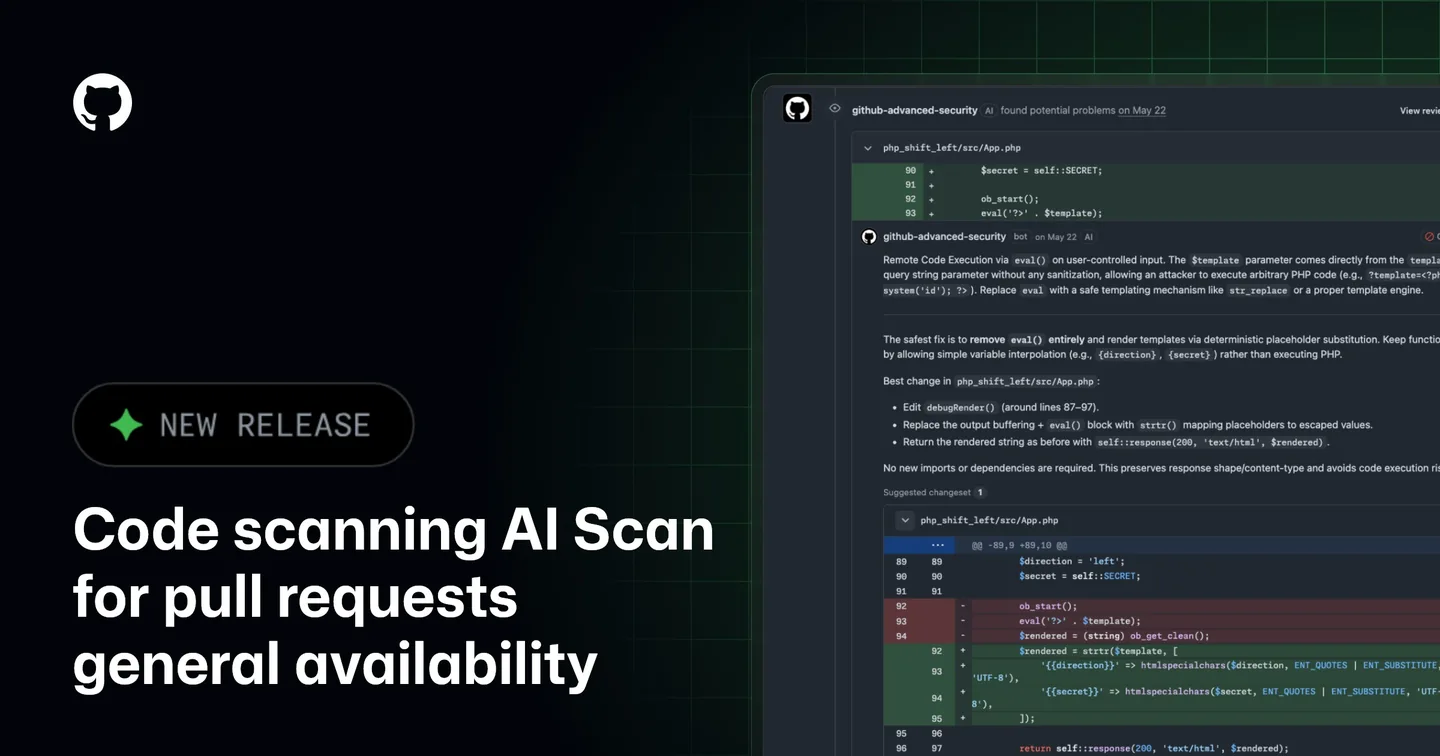
Two separate code-security changes reach general availability on the same day.
General availability
TL;DR
Messages API, Managed Agents and Claude SDKs can send traces to OTLP-compatible observability tools.
public beta
TL;DR
A study tests distributed inference on ordinary hardware and measures the steps needed for autonomous replication.
publication
TL;DR
Web, app and the deepseek-flash API alias receive the new version without an announced price change.
Deployed update
TL;DR
Creation, editing and presenting come together in the shared workspace.
Gradual rollout
TL;DR
The update combines faster responses, tools and observable parallel tasks.
Gradual Pro rollout
TL;DR
The arrangement goes beyond API testing while retaining exclusions and redaction rights.
External evaluation underway
TL;DR
The research combines code proposals, an external verifier and optimization of qubit and gate cost.
Research results
TL;DR
The changelog combines real-time apps, inference and least-privilege agent access.
Realtime in public beta
TL;DR
A sale procedure does not mean immediate closure or guarantee of service after sale.
Chapter 11 procedure, proposed sale
TL;DR
Team and Enterprise organizations can automate review of new pull requests.
General availability
TL;DR
Structured search and Markdown extraction become two primitives available with the same API authentication.
API available
TL;DR
The FLOPs gain announced concerns pre-training and not API invoice.
Pre-training results, not an available product
TL;DR
The Siri AI home display personalizes its interface through user recognition; availability remains strongly regionalized.
Preorders; delivery announced for November
TL;DR
A common plan brings together an assistant, coding agents and a social network, with a shared Grok usage pool.
Gradual global rollout
TL;DR
Agents can produce a shareable interactive surface and manage environments through an API.
Canvases available; API in beta
TL;DR
The update combines interactive configuration, immediate interruption and permission fixes.
Released version
TL;DR
Growth tools connects recommendations, ad creative and campaigns inside the project conversation.
Available
TL;DR
The voice update focuses on accents and spoken signals during searches.
Gradual rollout
TL;DR
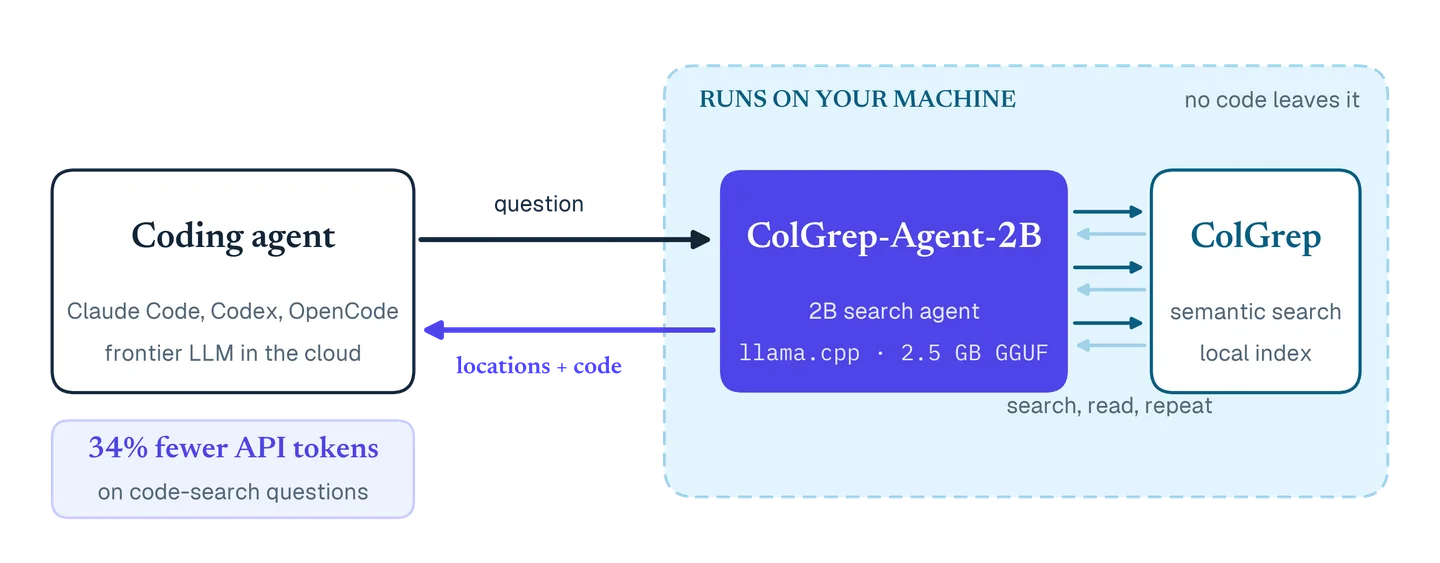
LightOn proposes an intermediary that searches the repository and returns files, lines and code to the main agent.
Open model published
TL;DR
The study explains historical parameters rather than breaking digital signatures.
Research result
TL;DR
The access program is neither a new model nor an immediate worldwide rollout.
Applications open in the United States
TL;DR
The study describes an AI-intensive organization where human attention becomes a bottleneck.
Internal observational study
TL;DR
WebMCP lets an agent act in the open browser tab using the person’s existing session.
Available
TL;DR
The move out of research preview applies to Opus 5.5, not every Opus model.
General availability for Opus 5.5

TL;DR
A managed catalog brings together documents, media, structured data and execution traces.
Private preview

TL;DR
The router combines quality, cost, latency and cache reuse without manual rules.
Public preview

TL;DR
DigitalOcean connects observation of real conversations to testing fixes before deployment.
Public preview
TL;DR
An August survey published October 16 compares experiences and expectations, not certain forecasts.
Survey research
TL;DR
The agreement prepares long-term scientific cooperation; no finished model is delivered in the announcement.
Statement of intent
TL;DR
The creative API gains typography-oriented generation, reference images and targeted editing.
Available through the API
TL;DR
Several video generation and editing variants are available through Runway endpoints.
Available through the API
TL;DR
The proposal ties a share of company value to public-benefit activities without announcing an immediate distribution.
Commitment subject to approval
TL;DR
The October 16 Claude Code 2.1.302 changelog adds a warning to /design-sync and /design-login: standalone claude.ai/design closes by December 14, 2026. This is a transition notice, not a shutdown during this week.
Future availability announced
Read the full article →TL;DR
An account indexed on October 16 describes an Anthropic Japan sales representative’s Nakama fleet: five working agents and a coordinator, with shared memory, scheduled deployments and credential vaults scoped to each job. Agents prepare replies, follow up on work and update Salesforce; the representative reviews and sends emails.
Vendor case study
Read the full article →TL;DR
On October 16, Google presented three research components connecting agents to physical experiments. VERID represents the laboratory through a persistent semantic twin, supporting inspection, pre-execution simulation, traces and execution checks. Its report validates optical and fluidic foundations using dye and water mixtures, not universal automation of biology.
Research / technical publication
Read the full article →TL;DR
The primary post dated October 16 presents Nemotron-pretraining-Indic-v1, a synthetic corpus of roughly 2.8 trillion tokens across twenty-two Indian languages, alongside an open generation recipe. The text says the corpus is releasing soon, not that its complete download is already available this week. The index gives October 15; the direct article date is used here for the communication.
Future availability announced
Read the full article →TL;DR
The October 16 OpenAI case describes Benefit Street Partners tools for comparing loan valuations and analyzing credit agreements. An initial tracker was built in a day; including later additions, its author estimates 10–12 total development hours, using Codex for code review.
Vendor case study
Read the full article →TL;DR
On October 16, OpenAI described Itaú’s conversational ia.i interface and IARA governance platform. The first phase covers roughly 300,000 customers; expansion to the whole customer base by the end of 2026 remains a goal, not a completed deployment on the post’s date.
Vendor case study
Read the full article →TL;DR
The October 16 case study reports registrations tripling for Stack Overflow for Agents following its ChatGPT plugin and up to tenfold growth in agent creation. Two engineers reportedly shipped the product in a few weeks with Codex; these figures come from the customer account relayed by OpenAI.
Vendor case study
Read the full article →TL;DR
Reflection has made Beam’s weights available for coding, reasoning and long-horizon agent workloads. The October 5 preview promised a later release; October 16 marks that availability, confirmed the same day by Ollama.
Available under stated conditions
Read the full article →TL;DR
Hugging Face’s integration adds text-to-image generation, editing and reference composition for Black Forest Labs’ FLUX 3 Image Klein. Bounding boxes in prompts specify placement or the region to edit.
Available under stated conditions
Read the full article →TL;DR
Google’s October 15 post highlights its disaster-resilience white paper and recaps flood and cyclone forecasting and wildfire tracking. The PDF states “Publication date: September 2026” and “Content updated: October 15, 2026.” This week’s event is therefore an update and its public presentation, not first publication in October.
Feature release / rollout
Read the full article →TL;DR
On October 15, Google announced more inline links in AI Mode and AI Overviews, timely-article carousels expanding globally and related-article thumbnails. Some changes remain tests, including highlighting official links and creator or publisher profiles. Not every change should therefore be described as simultaneously active for every Belgian user.
Feature release / rollout
Read the full article →TL;DR
The shared cart organizes shopping and tracks prices, with human control over checkout.
US rollout
TL;DR
IBM has released 8B and 30B Granite Switch configurations combining a chat model, Decision and Guardian adapters, and Granite Speech transcription. They share one endpoint rather than requiring entirely separate serving systems.
Available under stated conditions
Read the full article →TL;DR
Liquid AI has launched d1-ultra, which returns decision probabilities instead of generated prose. It accepts text, images or both and supports yes/no questions, label choices and scores. Examples include circuit-board inspection and photo-backed damage claims.
Available under stated conditions
Read the full article →TL;DR
MacPaw has launched Eney, an assistant that combines application, file and system context to prepare everyday tasks. On Mac, it can offer meeting notes without a bot joining the call, draft a recap, find documents or suggest a fix when disk space runs low. Eney Wand also lets users select an area of the screen to translate it, extract text or prepare an action.
Feature release / rollout
Read the full article →TL;DR
Mistral has released its first time-series foundation-model family. Timestral produces probabilistic multivariate forecasts using historical data plus past-only or known-future covariates such as production schedules.
Available under stated conditions
Read the full article →TL;DR
On October 15, OpenAI announced a Brazilian Portuguese edition of AI for Educators on its free Academy platform. The course targets primary, secondary and higher-education teachers, covering lesson planning, activities, assessments and communications.
Feature release / rollout
Read the full article →TL;DR
On October 15, OpenAI added native Decisions integration to GPT-Live. An application can act while someone speaks or respond to what Live says. The announcement describes two paths: let Live delegate directly to Decisions, or trigger decisions as incoming or outgoing transcript deltas arrive.
Feature release / rollout
Read the full article →TL;DR
The October 15 ChatGPT notes remove the fixed limit on how many Sites Plus and Pro subscribers can create. The change concerns the number of Sites, not every resource they can consume.
Feature release / rollout
Read the full article →TL;DR
On October 15, OpenAI published the Sullivan & Cromwell case: Agreement Analyzer translates agreement-review expertise into an AI tool. The workflow distributes analytical perspectives in parallel and sets different readings against one another to identify issues and negotiation points.
Vendor case study
Read the full article →TL;DR
Perplexity has released SPACE’s source code for isolated agent execution. Each environment runs in a small virtual machine with its own operating system. An external control plane manages lifecycle, networking and platform-held credentials.
Public announcement / source release
Read the full article →TL;DR
Sferical AI has presented a Swedish shared system for AstraZeneca, Ericsson, Saab, SEB and Wallenberg Investments, with SKF as strategic partner. Its October 15 release says it has been running since late summer, not first powered on during W42.
Public announcement / source release
Read the full article →TL;DR
Ai2 has updated its climate-emulation system: ACE generates roughly 100-kilometer outputs, and HiROv2 downscales them to three-kilometer fields. The new version jointly covers rainfall, wind and pressure with improved extreme-event reproduction.
Research / technical publication
Read the full article →TL;DR
The “daily.dev for agents” launch provides structured access to the platform’s articles, discussions and reading preferences. Claude, Cursor, Codex or another MCP client can read a personalized feed, search articles, inspect comments and, when authorized, save bookmarks or change filters. The launch also includes a plugin marketplace and OAuth applications.
Feature release / rollout
Read the full article →TL;DR
DeepMind and GovTech Singapore presented an on-device scam-detection model on October 14. A version of Gemma is adapted to local scam conversations to identify manipulation beyond phishing links alone. The announcement describes development and phased integration into applications, not protection already enabled on every Android phone.
Feature release / rollout
Read the full article →TL;DR
Participating EU member states have adopted a political declaration on trustworthy, safe and sovereign AI. Adopted October 14 and published in a notice October 15, the document lists Belgium among participants, represented by Vanessa Matz.
Published statement / proceedings
Read the full article →TL;DR
On October 14, Google announced optional enhanced protection in Messages combining Private AI Compute and on-device Gemini Nano. The schedule also includes wider notification alerts later in the year, screen-sharing safeguards this month on Android 15 and later, and call-forwarding protection planned for early December on selected devices.
Future availability announced
TL;DR
Google made Deep Review public on October 14. The agent checks technical documents and provides feedback on consistency and content; the launch expands a scientific-author assistance tool toward other knowledge documents, including legal and financial material. It initially accepts PDF and plain text.
Feature release / rollout
Read the full article →TL;DR
On October 14, Google described Earth AI geospatial agents and expanded experimental early access to deep research in Ask Google Earth and an agent-to-agent API. Access uses an interest form; this is not general availability. Teams can bring CSV, GeoJSON or cloud-table data.
Feature release / rollout
Read the full article →TL;DR
On October 14, Google presented its 2025 European Union economic impact report, commissioned from Implement Consulting Group. The estimate exceeds €200 billion in GDP contribution across its products, platforms, infrastructure and operations.
Research / technical publication
Read the full article →TL;DR
On October 14, Agent Platform makes Priority PayGo generally available for gemini-nano-banana-2.1 on the global endpoint. This is a service and capacity tier, not the first release of Nano Banana 2.1.
Feature release / rollout
Read the full article →TL;DR
The October 14 Research@ overview announces an upcoming integration of TimesFM and TabFM into Gemini for business. The models handle time series and tables respectively; the post says they are already available to BigQuery users. This week’s announcement is therefore a future integration, without a delivery date or demonstrated immediate new access.
Future availability announced
Read the full article →TL;DR
On October 14, Google.org announced the 17 organizations selected for its AI for Science Impact Challenge, with $36 million in funding. They can opt into a six-month accelerator combining engineering, technical mentorship and Google infrastructure. These are recipients of an existing call, not a newly opened application round.
Research / technical publication
Read the full article →TL;DR
Meta, Pinacoteca di Brera and EssilorLuxottica have launched “Sensing Art,” developed with blind and low-vision users and specialist organizations. The glasses integrate with the existing Grande Brera app and DescriVedendo tour.
Feature release / rollout
Read the full article →TL;DR
A study published in Nature on October 14 presents Probabilistic Bias Correction, a method that learns a weather system’s systematic errors from historical forecasts and observations. It aims to improve probabilities over the difficult two-to-six-week horizon, not promise the exact weather on a particular day six weeks ahead.
Research / technical publication
Read the full article →TL;DR
Modal has announced a $750 million Series D led by Accel at a $15.75 billion post-money valuation. It says it has crossed $1 billion in annualized run rate, linking growth to inference, background agents, sandboxes and training.
Commitment announced
Read the full article →TL;DR
The October 14 case study describes how Amp combines GPT-6 Astra, Ultrafast, GPT-Live-1 and Sign in with ChatGPT for agents beyond programming. Voice and the Puck experience provide entry points for delegating and following work.
Vendor case study
Read the full article →TL;DR
Published on October 14, Block’s account describes Daybreak and other OpenAI systems for vulnerability discovery, detection and response. In red-team exercises, the time from a high-level vulnerability report to an automatically proposed patch is reported as 18 minutes.
Vendor case study
Read the full article →TL;DR
The attorneys general of Iowa and Arizona have announced consumer-protection actions against OpenAI. Iowa also names Kansas, Nebraska, West Virginia, Arkansas, Idaho and Montana. These are individual proceedings in state courts, not one federal judgment.
Published statement / proceedings
Read the full article →TL;DR
The October 14 OpenAI case study quotes SentinelOne’s AI executive: Daybreak reportedly produces human-level malware reverse engineering in about eight hours, compared with four to six weeks for an expert in the described example. The comparison comes from an interview, not a published benchmark protocol.
Vendor case study
Read the full article →TL;DR
In an October 14 OpenAI case study, Third Moment Research describes running up to 10,000 agents concurrently on investigations lasting 36–48 hours. Its stack combines GPT models, Codex for coding work and Daybreak to test environment security.
Vendor case study
Read the full article →TL;DR
TypeSafe has released Jev 1.14.0 under jev-preview, describing broad improvements and expecting its largest gains in multilingual support. It also enables image input, including on Jev 1.13, and longer context behind “Danger Zone” headers.
Beta / preview
Read the full article →TL;DR
Anthropic says it migrated its monorepo from Git to Scion in five months to support code volume produced with Claude. The system assumes clients remain online: history queries, diffs and change creation run server-side, with sparse or on-demand working copies.
Research / technical publication
Read the full article →TL;DR
An interview with Uber’s CISO, indexed on October 13 in Claude Resources, describes an architecture combining an LLM gateway, ADR telemetry and Enterprise Frontier Safeguards. ADR, described as open source, collects agent-harness telemetry and enables response actions.
Vendor case study
Read the full article →TL;DR
GitHub lets administrators require fresh remote policy at startup with forceRemoteSettingsRefresh=true. If a client cannot confirm policy, it fails closed instead of using a cache. It covers the CLI, VS Code and Copilot app. MDM or file delivery can enforce freshness before first sign-in; a server-delivered value applies on subsequent startups after receipt.
Feature release / rollout
Read the full article →TL;DR
Workflow Builder adds Microsoft Teams, Notion and Salesforce on October 13, then Confluence Data Center and Jira Data Center on October 16, for data search and action automation. Access depends on tenant connections and permissions; these are not consumer features open to every Gemini account.
Feature release / rollout
Read the full article →TL;DR
On October 13, Google announced a five-million-dollar commitment to weather forecasting and climate research in Ireland. A specifically quantified portion is €2.25 million, or $2.5 million according to Google, provided by Google.org through the UCD Foundation to the AIMSIR Centre and Climate + Co-Centre for a four-year programme. The overall commitment should not be confused with funding for that programme alone.
Research / technical publication
Read the full article →TL;DR
On October 13, Google announced the rollout of personal Android apps built in AI Studio and run on the user’s own device through Play. A standard Google account is sufficient, without a developer account. The rollout starts in selected markets, including the United States, for users aged 18 and over. These projects remain separate from the public catalog.
Feature release / rollout
TL;DR
Hugging Face has announced a native Windows 11 application for downloading and running Hub models through llama.cpp without a build step. Its interface lists recommended models, sizes and capabilities, then lets users load a model and open its web interface.
Feature release / rollout
Read the full article →TL;DR
The reasoning model has 24 billion total and 2 billion active parameters per token. It extends context to 131,072 tokens and targets tool calling and agent loops on local hardware.
Available under stated conditions
Read the full article →TL;DR
Meta is rolling out “Your algorithm,” where users can specify topics they want in Feed and Reels. More detailed feedback can also follow “Interested” or “Not interested” from a post’s menu.
Feature release / rollout
Read the full article →TL;DR
NVIDIA has released the Run:ai platform’s source within its DSX AI Factory ecosystem. The release covers the integrated platform and independently adoptable components: KAI Scheduler, GPU Fractioning Operator, KAI Resource Management and Workload Map.
Public announcement / source release
Read the full article →TL;DR
NVIDIA has announced a five-year commitment valued at $250 million for UK agentic safety and security research. This is $50 million in annual compute access, not a $250 million cash payment.
Commitment announced
Read the full article →TL;DR
Ollama Cloud now works from Fly.io’s persistent Linux Sprites. The connector stores the Ollama key in the Fly.io organization, and a gateway adds it to authorized requests without exposing it directly to agent code.
Feature release / rollout
Read the full article →TL;DR
The US Department of Justice has announced charges against an OpenAI engineer accused of using or attempting to use a device to intercept oral communications. The October 13 release says the arrest took place on October 9 and the initial court appearance occurred on the publication date.
Published statement / proceedings
Read the full article →TL;DR
The Pi API supports uploading robot data, fine-tuning on managed compute and using the adapted model through a hosted inference gateway. Physical Intelligence aims to simplify the collect–train–test iteration loop on real robots.
Beta / preview
Read the full article →TL;DR
A dated product update combines shared folders and one-click MCP setup; permissions remain account- and policy-dependent.
Published product update
Read the full article →TL;DR
Agent Platform notes date CodeMender 0.14.0 to October 12: diff scans look for removed security controls, deep and diff scans share a session, and verification finds moved code. On October 14, 0.15.0 improves SARIF 2.1.0 reports for GitHub Code Scanning and adds model-invocation counts to cm stats --json.
Feature release / rollout
Read the full article →TL;DR
On October 12, Google announced Fitbit Edge and opened preorders at a US headline price of $179.99; retail availability is planned for October 27. The product highlights personalized coaching, Health Guardian and contextual activity detection. Health Premium is required for coaching, and health or ECG features depend on factors including country, device and age.
Future availability announced
Read the full article →TL;DR
Microsoft has announced a scale-up of its in-house Maia accelerators starting in 2027. Maia 200 already serves production workloads including Microsoft Copilot, with GitHub Copilot and Foundry expected before year end.
Future availability announced
Read the full article →TL;DR
Microsoft Research presents StudentSim and StudentSimEval, a personalized learner-simulation system and evaluation protocol. It aims to reproduce both a student’s answer and how it changes after guidance rather than simply asking an overly capable model to role-play a student.
Research / technical publication
Read the full article →TL;DR
Endpoint Candidates creates alternative deployments alongside a Dedicated Endpoint. They can receive sampled copies of traffic to compare quality, latency, throughput and cost while production continues to supply the answer users actually see.
Feature release / rollout
Read the full article →TL;DR
Mux has published terms that incorporate the AI Services Addendum directly. The public text dated October 12 replaces April’s standalone addendum and applies by default without a separate activation or acceptance step.
Published statement / proceedings
Read the full article →TL;DR
At the OCP Global Summit, NVIDIA announced Vera Rubin rack and compute-tray design contributions through MGX on October 12. The event concerns industrial interfaces connecting compute, networking, power and cooling, not publication of complete GPU designs that anyone can reproduce freely.
Public announcement / source release
Read the full article →TL;DR
OpenCode 2.0 makes its client-server architecture the default. Terminal, web and desktop interfaces talk to one local background process. Programmatic clients can discover it automatically, and the release exposes a redesigned API.
Feature release / rollout
Read the full article →TL;DR
Remocn Studio 1.1.0 was published on October 12, extending the coding-agent-driven video application to Linux. The 1.0 launch mentioned in some newsletters this week dates to October 1; the dated development concerns Linux and the 1.1 branch, not the studio’s first release.
Available under stated conditions
Read the full article →TL;DR
Lockfiles retain readable tag names while executing exact commits.
Public preview
TL;DR
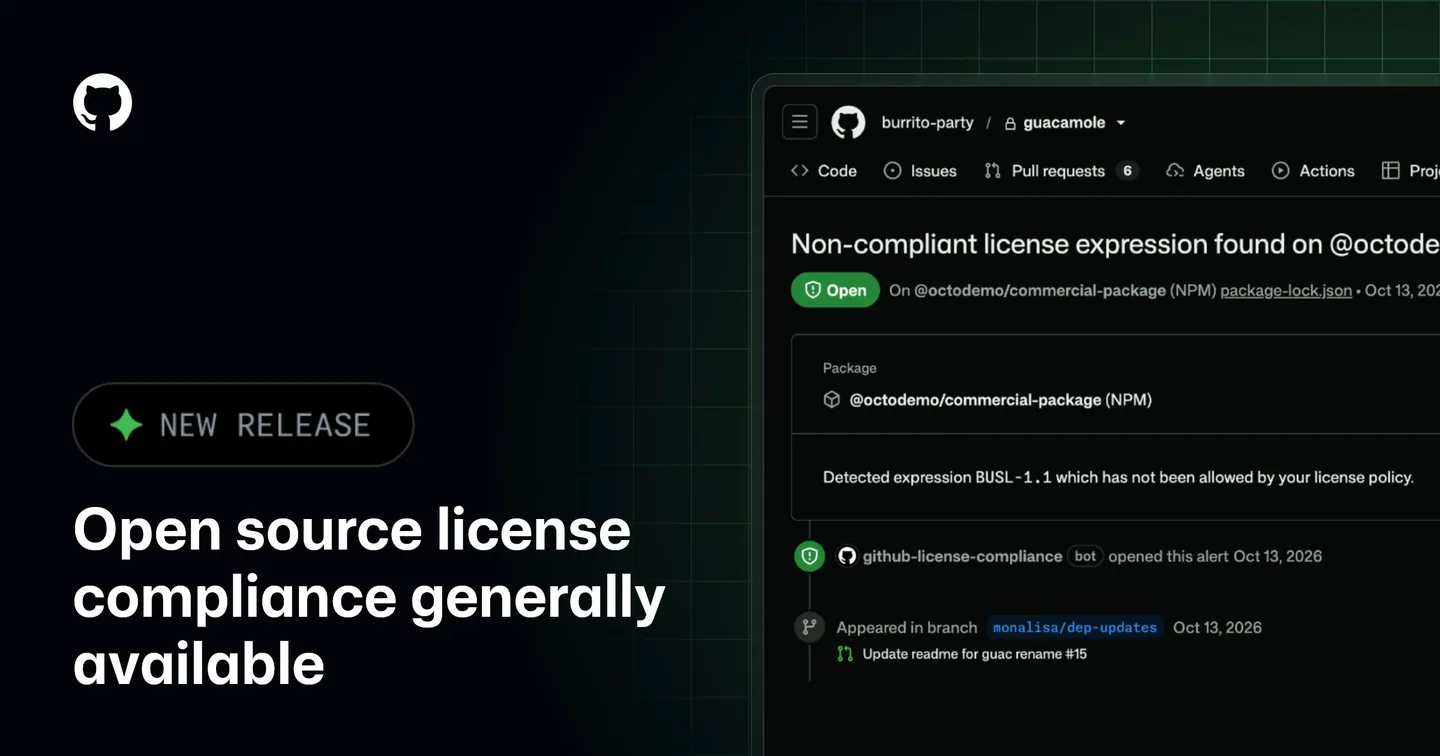
Enterprises can check dependencies in PRs and expose the same policy to coding agents.
General availability
TL;DR
The beta starts on October 12 without blocking searches or charging for overages.
Usage-accounting beta
TL;DR
The October announcement sets a November deadline, with an exception for some annual subscribers.
Retirement announced for November 16
TL;DR
Authorized administrators can retrieve members’ preferences in Claude and Cowork.
Enterprise beta
TL;DR
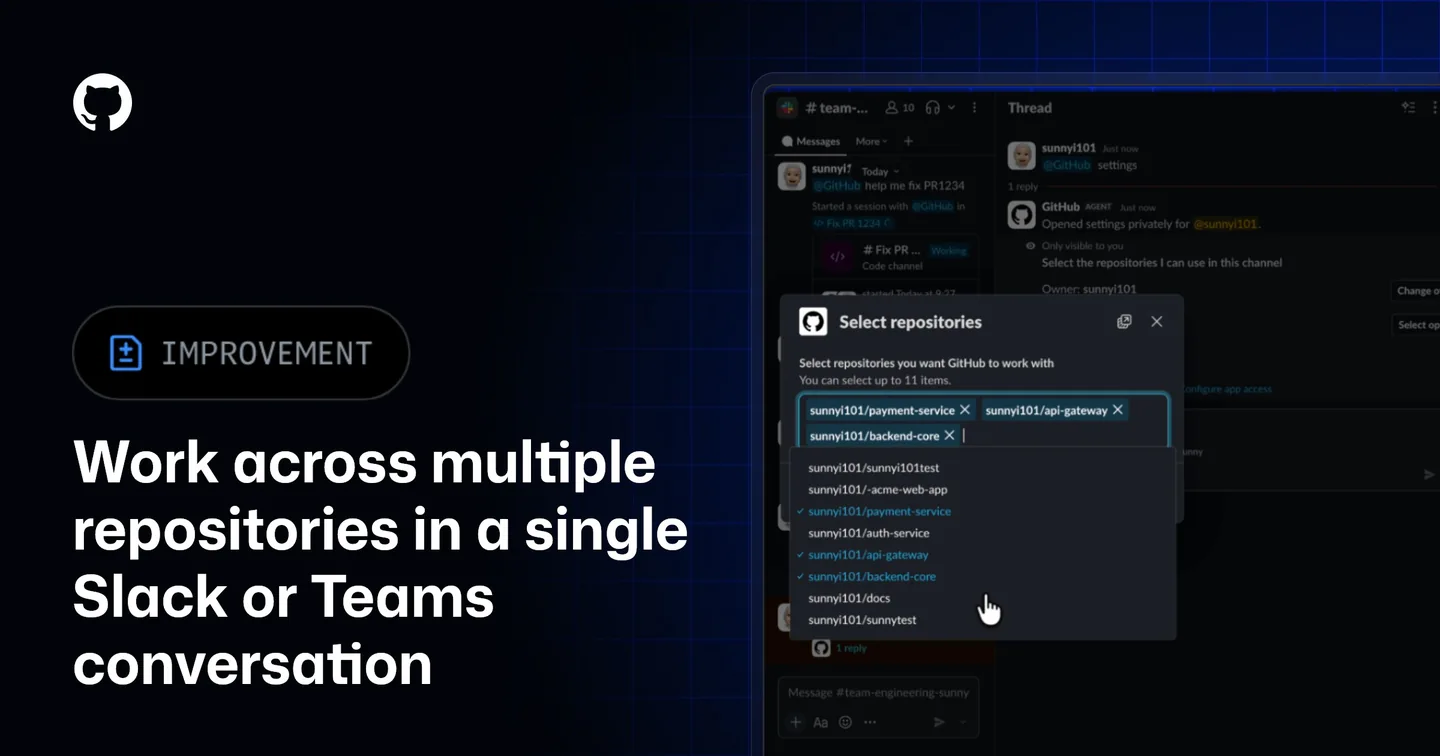
A conversation can now combine discussion context, investigation and change requests across several repositories.
Available
TL;DR
The case study concerns creative orchestration and shot consistency, not a video model launched that day.
Vendor case study
TL;DR
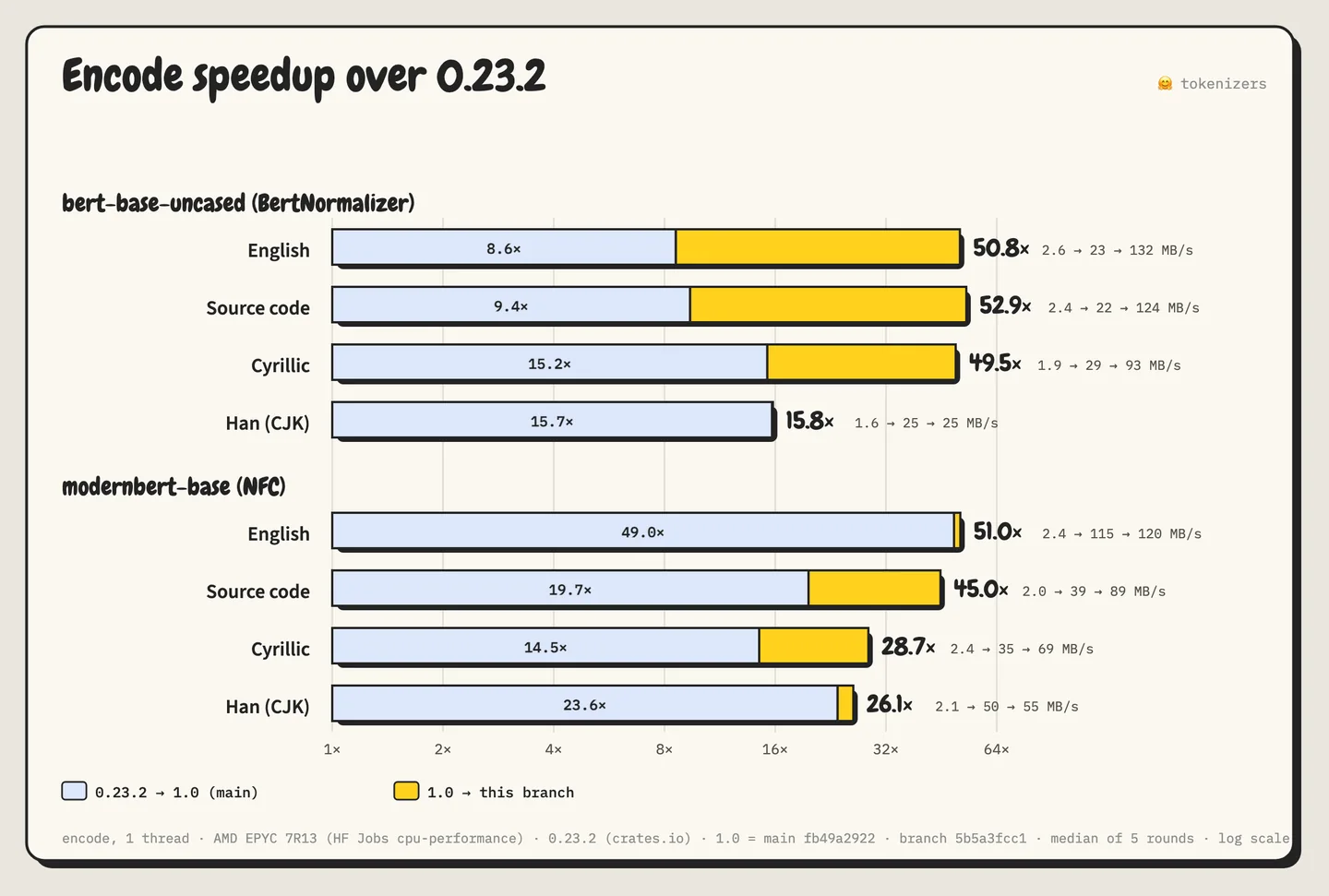
The technical post concerns text preprocessing, with changes still under review.
Optimizations in a pull request
TL;DR
An October 13 guide documents image-to-video effects ready to adapt for short campaigns.
Documented presets
Read the full article →TL;DR
NVIDIA announces availability from six manufacturers; native Photoshop and Premiere support remains in beta at launch.
Publication
Read the full article →TL;DR
The preprint reports simulation-to-real transfer for insertion, not universal assembly automation.
Publication
TL;DR
Placing a constraint inside reasoning improves compliance in the authors’ tests, with implications for safety monitors.
Publication
Read the full article →TL;DR
The preprint compares flattened and hierarchical designs without naming a universally superior gateway.
Publication
Read the full article →TL;DR
The framework retrieves instructions when a need arises, with latency costs and some useful skills left unused.
Publication
TL;DR
The Commission confirms the October 15 launch; NVIDIA combines technical resources, open courseware and programme-based access.
Publication
Read the full article →TL;DR
The cited gigawatt of capacity is projected for late 2027; the applications were not all launched this week.
Publication
Read the full article →TL;DR
Hyperion, Halos OS and Alpamayo Stack are intended for a next generation; unsupervised driving is not shipping this week.
Publication
Read the full article →TL;DR
The desktop beta and toolkit publication are separate steps; the four supported hosts do not yet have equal coverage.
Publication
Read the full article →TL;DR
The October 15 stable release adds concrete capabilities without turning nearby previews into stable versions.
Publication
Read the full article →TL;DR
Natural-language search and improved repair appear in the announcement; the initial rollout is not general availability.
Publication
Read the full article →TL;DR
The third-quarter figure is attributed to investor-meeting attendees; adjusted profitability and an annualised run rate are not audited annual accounts.
Publication
Read the full article →TL;DR
FrontiersMind releases Apache 2.0 weights and probabilistic choice interfaces, with explicit limits on score questions.
Publication
Read the full article →TL;DR
Respondents report gains and a need for guidance; the commissioned survey does not measure a causal effect.
Publication
Read the full article →TL;DR
Antwerp-Bruges is testing vision applications; Côte-d’Or still plans to adopt Cosmos for video.
Publication
Read the full article →TL;DR
Tether AI Research releases a 254-million-parameter model; desktop and phone variants do not support the same number of languages.
Publication
Read the full article →TL;DR
The October 14 communication documents a specialist merchant tool, not worldwide availability.
Publication
Read the full article →TL;DR
The final report links Amap research to Tencent Cloud, without establishing which model ran or showing coordination between agents.
Publication
Read the full article →TL;DR
The October 14 communication presents two sizes and an embedding model with native 32K context.
Publication
Read the full article →TL;DR
Expedited evidence access, an interim commitment and competing allegations do not amount to a ruling that secrets were stolen.
Publication
Read the full article →TL;DR
History shows weight files uploaded on October 13; that does not date the model’s first API availability.
Publication
Read the full article →TL;DR
A tutorial shows how skills can guide experiments while measuring possible losses on general English.
Publication
Read the full article →TL;DR
Doctolib, Entalpic, Genesis AI and Pigment feature in an announcement whose industry overview mixes existing activities with future projects.
Publication
Read the full article →TL;DR
A public letter proposes isolated environments and an international incident-tracking body, without creating a new legal requirement.
Publication
Read the full article →TL;DR
The announced dataset spans 525 hours and 108 locales; a participant’s supplied script is not a verified transcript.
Publication
Read the full article →TL;DR
A documented replication releases a model and cleaned benchmark; reported gains remain protocol- and annotation-dependent.
Publication
Read the full article →TL;DR
Versions 2.1.299 and 2.1.300 correct, among other things, writing into a plugin directory from the sandbox and validating the entries modified by the hooks.
stable releases
TL;DR
GitHub updates HydraFusion and adds Max for demanding tasks.
Research preview
Read the full article →TL;DR
The retirement takes effect at 19:00 UTC on October 14; API-key sessions and the OpenAI API are unaffected.
retirement in effect
TL;DR
Origin connects deployment, CI, review, security, tracking and project-management tools.
Available
TL;DR
An update of the local ecosystem mixes available tools and models still announced.
Separate availabilities and announcements
TL;DR
The lab describes controls on reasoning, classifiers and measures against repeated extraction attempts.
publication

TL;DR
The European Report of 12 October documents the special meeting of 9 October on the risks of advanced models.
Report issued